Being Non-Binary
How being a therapist and hair-loss helped shape my thoughts on gender and realizing I am non-binary

Dear Fellow Traveler,
My mom and I were running errands a couple of months ago and, as always seems to happen with our rambling ADHD minds, she asked me an incredibly profound question on our way to return a shopping cart: “What does being non-binary mean to you now?”
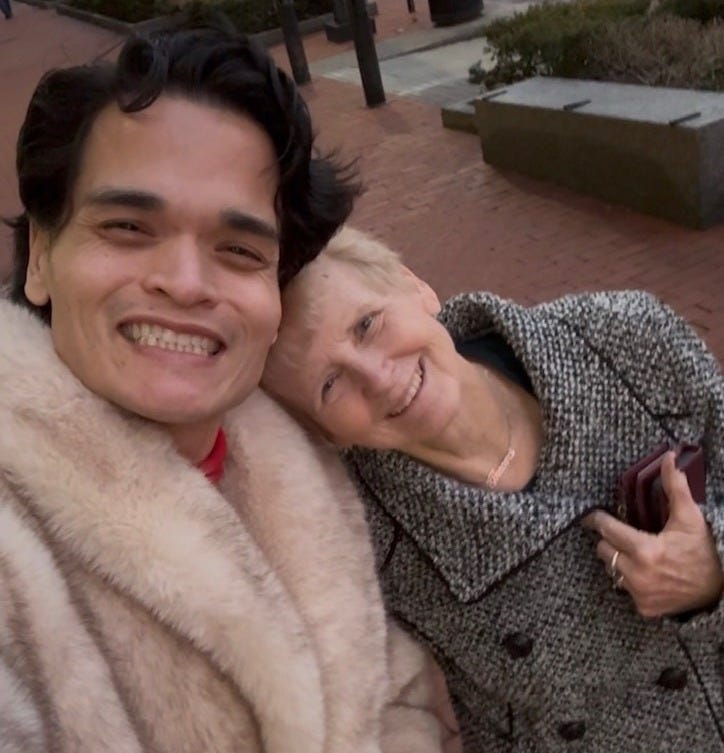
Me: “What do you mean now? Like right now?”
Mom: “I mean two years in. Now that you’ve had some time with it. You seem much more you now. When you first came out you went - ”
Me: “Really femme?”
Mom: “Yeah. You went all heels and skirts but now you seem more…balanced?”
Me: “Yeah, I see what you mean. I think I would love to be more into heels but they hurt my feet. And I like dresses sometimes, but it depends on the environment I am in whether or not I am feeling them. Honestly, the feeling of fascism all around doesn’t make dresses speak to my spirit as much as they did when I came out during the Biden Presidency. They gave me so much joy, but now, unless I am in a queer, queer space, I feel vulnerable and out of place.”
Mom: “That makes sense.”
Me: “But really, my feeling of my non-binaryness has less to do with fashion and more a feeling of how my brain is connected.”
As we walked into Giant Eagle, I went on to explain how I felt to my mother, but in the interest of coherency, I’ll forgo the dialogue we had walking up and down the frozen food aisles that day.
How I came to know I am Non-Binary
When I was doing my dissertation examining the interaction of the professional and personal LGBTQ+ identities of professional LGBTQ+ advocates on college campuses, the most important discovery I made from their stories was that many people only realize their own queer, non-binary, gay, and/or trans identities as a result of working with and for other queer people.
I always thought that professional queers became professional queers because of profound personal experiences that made them want to help others in an official, advocacy-based way. The narrative went something like, “My advisor helped me realize I was trans and not alone, and so I wanted to help others in that same way.”
It never occurred to me how transformative professional queer work is on a person’s own personally held LGBTQ+ identities, with a narrative that sounds much more like, “I was helping this bisexual student come to terms with being bisexual despite his boyfriend telling him it was just a stop on the way to gay, and it struck me, ‘Oh wait, I am not fully straight and not fully gay either. I’m bi.’”
It shouldn’t have surprised me when I made my own realization years later as a gay therapist working with trans, non-binary, genderfluid, and genderqueer folk that I might come to realize I had those same experiences and that I am non-binary, but it sure did.
Prior to this, I couldn’t have told you why, but I often felt confused and ashamed about my masculinity or lack thereof. I also felt deeply uncomfortable with being told that how I experienced myself and my strengths was feminine or that I was emotionally intense like a girl.
For a long time, I thought I was either not owning up to my manliness or that I was ashamed to be feminine but I now know it is just that these were not the right descriptors.
I would burst into tears every time one of my non-binary or trans clients would talk about their fears related to trans hate crimes or anti-trans legislation. I would cry so hard and so intensely at their stories or worries sometimes that I thought I was a terrible therapist because I was making their fear and pain about me.
Who was I to feel this deeply and to take up this much emotional space when this was not directly impacting me as I sat in my cisgender privilege—even though I’d been called a f*ggot since middle school and often mocked for my lack of masculinity? I have never been the type of person who could hide my sexuality or my gender.
Then one day in June of 2024, I was talking with a client about her gender and I realized, ‘Wait, I am you and you are me!’
All of the sudden, I remembered being six years old and painting my nails blue and feeling better about myself than I had before.
My aunt had done them up in this beautiful blue (robins egg is still my favorite nail color) and I was proud of them and ran to my dad who was the first person I wanted to tell about them. I think I thought he would understand better than anyone else how good painting your nails feels.
I could not have been more wrong. “Take that sh!t off your fingers,” he yelled. To which I promptly started to cry.
Dad: “Who told you, you could do this?”
Me: “Aunt Karen, she painted them for me.”
Dad: “Tell her to take it off of you now.”
Me: *Still crying.
Dad: “Boys don’t cry. Stop crying or I’ll give you something to cry about.”
And so I did. I stopped crying. I went back to my Aunt and had her take off my nail polish and I never talked to her or anyone again about my beautiful nails.
But in that moment at 37, it all came back to me. I knew again what I’d known at 6 years old but didn’t have words for at the time. I was and have always been non-binary.
Gender is a Social Construct
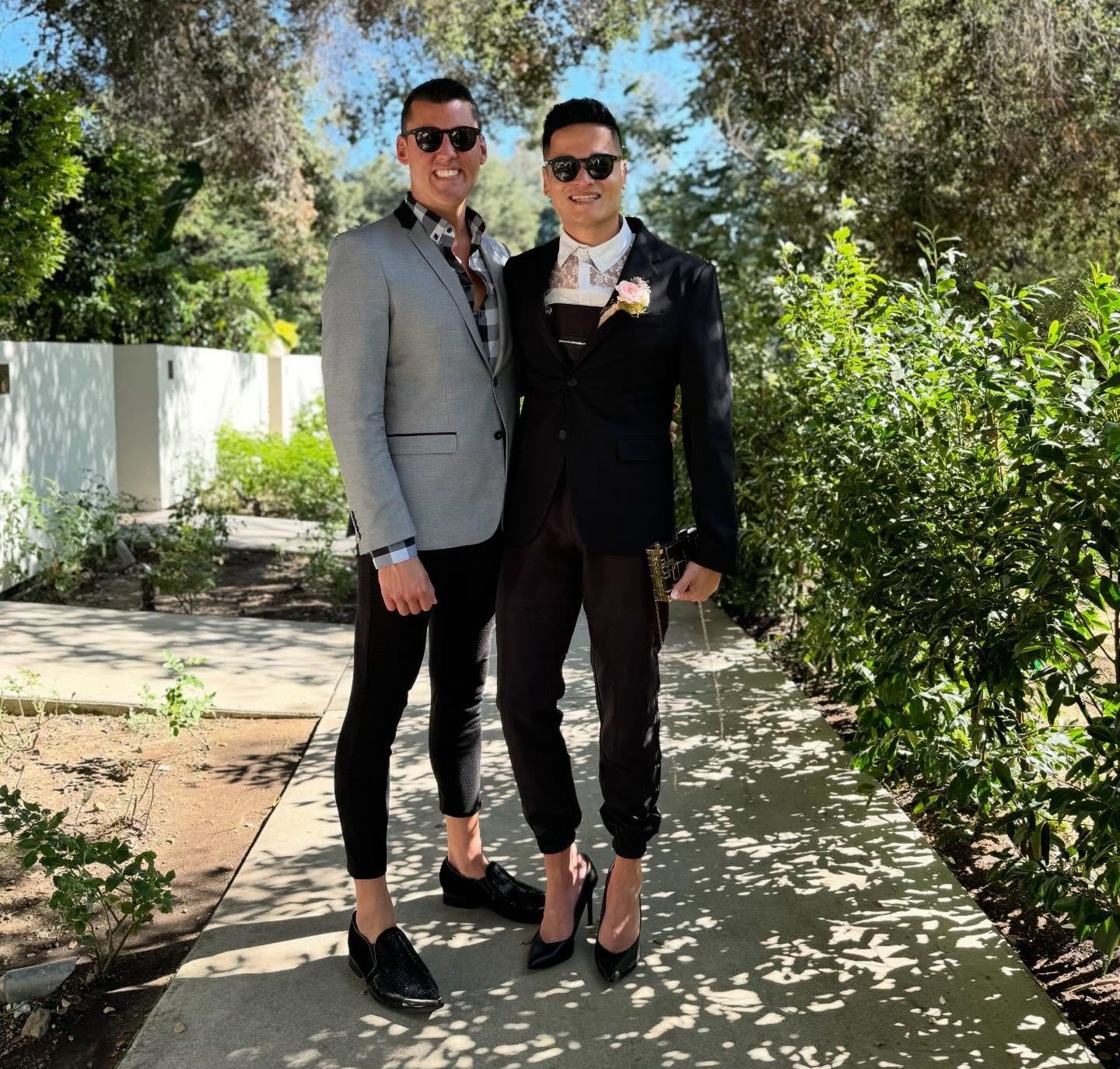
It seems trite to say that “gender is a social construct” but it really is. I think at the simplest level for me, gender was what I could see. I was a biracial, half-white, half-East Asian kid, and all the adults and kids around me were white.
I thought that men wore scratchy suits and pointed dress shoes. They were hairy and had beards. I couldn’t articulate it but because of my East Asian heritage I am the exact opposite of hairy and when I try and grow a beard I look more muskrat than man. Before I knew that was just my genetics, my inability to grow body hair made me feel less than. Less than masculine.
Boys played softball and talked about wrestling and threw really hard at dodgeball. I was a terribly uncoordinated kid and hated wrestling.
Women wore dresses with big belts around their waists. They wore pantyhose and had runs in their stockings. The one time I tried on my mom’s pantyhose in secret, I split them with my rough, calloused heel. Luckily my mom had a lot of split pantyhose so I don’t think she ever noticed.
Girls played on the swings and put flowers in each other’s hair. I loved playing on swings but I hated having flowers in my hair because I knew if boys didn’t paint their nails they definitely did not put flowers in their hair.
I remember when I was 4 and in Sunday school and I wanted to make a pink bunny for Easter, but the teacher would only let boys make blue bunnies and girls make pink bunnies. “Are you a girl,” she asked? “No.” I said in a strained high voice.
I cried in anger as I walked out of that church classroom and when my mom saw me she immediately asked me what was wrong and I told her, “Mrs. (what was her name) wouldn’t let me make a pink bunny because she said pink bunnies are for girls, but the easter bunny is pink, this is not the easter bunny,” I said holding it up. “This is just some blue rabbit.”
My mom and I have talked about this incident a few times since and though she cannot remember the teacher’s name either, she remembers marching back into that classroom with me in tow as I was saying, “No, you can’t say anything to her that is disrespectful.”
She told the woman I could make a pink bunny and that “there is going to be no gender policing of my son in this church,” and she sat down with me, her knees all big in the kid-sized chair, and I made a pink Easter bunny right there in front of the teacher, who looked absolutely rattled.
That teacher never talked to me about gender again.
I don’t know why two years later I didn’t tell my mom about the nails, but I didn’t.
My dad, although he was a vulnerable narcissist, was not a cruel person. For reasons I don’t have the space to go into fully here, I know his reaction was out of fear for his adopted, feminine, son of color that he was terrified the world would hurt.
I believe in my heart of hearts that his reaction, although flawed and drunk, was his way of trying to protect me from the horrors of a world he knew would hurt me if I was too fem.
What I have come to realize these past two years is that when I was dissociated from my own true gender, my understanding of gender was stunted. When I came out at 37, despite all the cognitive, intellectual, and clinical work I did to have an expansive understanding of gender, my emotional understanding was still somewhere in childhood, centered on the notion that girls put flowers in each other’s hair and boys talk about wrestling.
As I grew up, I learned to factually state that I was a boy and when I turned 18: a man, even though I never saw myself as a man. I also never saw myself as a woman so I knew I was not trans.
Figuring out I was non-binary was like being struck by lightning and I realized I had always looked at and envied people like my friend Phillip who was the sexiest, non-binary person I had ever seen living their fullest life in skirts, blouses, heels to the rafters and a shaved head.
I never felt sexy until I embraced being non-binary. I never understood feeling wanted or desired until I realized I was non-binary.
And so at first, having been locked away in button-downs, opaque shirts, drab jackets, and flats so flat I felt they made me shorter, I went super femme: heels, legs for days, lipstick, contouring, lace tops, and skirts.
But gradually I realized, I needed to try out the most feminine possible version of myself to get to my level of fem-masc balance.
I also realized how much some gay men hate women and also hate me being in their spaces with my non-binaryness. I could feel a coldness I never felt before. It was a disgust or, alternatively, a tiredness that said, “Why are YOU here in OUR space?” And I wanted to say, “But I am you. Please don’t kick me out.”
No one kicked me out, at least not for being non-binary. I was once asked to leave a house party on Fire Island for being Asian. Maybe that was why I was so shocked by the rejection I felt at first, I had experienced it many times as an East Asian looking person in North American gay spaces but this was different and more.
I was also lucky. I had incredibly supportive family and friends.
Now, I don’t care what random people think about me and show up where I want to show up; but in the first 11 months of my non-binary awakening, I was so sensitive to other people’s energies I would cry at times when I felt unwanted.
I was a raw nerve. The stunting I felt around my gender meant my own embodiment of myself had been delayed and I had a lot of catching up to do. Truthfully, I probably still do.
The first time I had sex. I wasn’t fully me. When I said, “I do,” to my husband, I wasn’t fully me. Coming out as non-binary was simultaneously thrilling and a crisis.
I was boggled that the same system of heterosexual and cisgender hegemony that stunted me also stunts many cisgender people, men especially, and it keeps them from thinking or deepening their own understandings of their genders.
I realize now that the loneliness I felt when some of my friends did not reach out to me when I was in gender distress was not because they didn’t love me. It was because they have considered so little about their own genders and how it has shaped them in the world that they had absolutely no idea how to support me as I discovered mine.
As I shared a much less expansive and coherent version of this with my mom over a pint of chocolate chip cookie dough ice cream, my mom asked me, “Okay, so if it is not fully about how you present yourself, what does being non-binary mean to you?”
“Connection,” I answered.
Gender and Hormones
Two statements stand out to me from the haphazard collection of thoughts I keep in my phone’s notepad.
All therapy is gender therapy because of the enforced societal hierarchy we must navigate due to the perceptions and enactments of and on our genders.
Seeing is not being. While I can see things others can’t about men and women because I am non-binary, I will never know what it is like to BE either of these things because I am not. I used to find sadness in this, like I was somehow incomplete. Then, I wondered if I was more. Now I know I am neither more nor less. I am different. Full in my own right. Sovereign in my own right, just as men, women, and all other positions on the gender spectrum are sovereign in their own rights.
I always want to remember that despite my own experiences and observations, gender and any gender related patterns I see are partial, biased by my own experiences, and that exceptions always exist.
I don’t have a direct tie in from those thoughts into this next section except that I felt compelled to share them with you.
Being non-binary to me is about seeing beyond male and female. I have always felt like I could sit with my masculine ways of thinking: action-oriented, take charge, move things forward, flee from discomfort or awkwardness, and see the false dichotomy of logic and emotion rather than the truth that we all make decisions emotionally and then justify them rationally later. I am, after all, assigned male at birth (AMAB) and was socialized as such.
But I also felt like I could see the fuller picture that most women seem to see. I heard a famous divorce attorney on a podcast say recently, “Men often win the battle, but women win the war,” in reference to the arguments they have and how resolute they are once their minds are made up. I felt like I was responsible like the women in my life. That I helped pick up the pieces the men left strewn about in their want to move fast and break things.
When we call someone fashionable - in the Midwest, where I am from, it is usually a woman - I have long wondered, “What does that actually mean?” To me, it is that all of her clothing balances or matches the other parts of her outfit, and that it either tells a story or is cohesive in some way, usually through color, texture, pattern, or shape.
When we call someone unfashionable—take, for instance, a Midwest dad wearing a Hawaiian button-down and khaki shorts with big pockets and sneakers with long socks—it is because the individual pieces he is wearing don’t match. They are not connected in any other way to one another except that they cover his body or that he likes those things individually because of the way they feel.
When people are uncertain about wanting to be stylish, monochrome always looks like a safe bet, but is that more interesting or exciting than cargo khakis, a Hawaiian shirt, and long socks with New Balance shoes? I don’t think so, but the monochrome reads as more coherent.
The traditional gendered behaviors of men and women seem more correlated with how estrogen and testosterone influence our bodies than any kind of gender essentialism.
Estrogen has been shown to increase pain tolerance in women and in persons who were assigned female at birth (AFAB) during the follicular phase of their menstrual cycles. At ovulation or peak estrogen levels, some women report increased pain; and in the luteal phase, when progesterone levels rise, pain increases due to a cytokine inflammation response.
Testosterone in contrast appears to help reduce the experience of pain in men and AMAB persons.
Research also indicates that in men, testosterone appears to increase impulsivity by reducing self-reflection and increasing the likelihood of acting on snap judgments. Conversely, higher levels of estrogen in women, and in particular estradiol, are associated with decreased impulsivity and improved dopamine and norepinephrine signaling—two neurotransmitters whose irregularity in signaling is believed to cause many of the symptoms associated with ADHD.
I have seen these hormone-related patterns show up in couples therapy. I find on average that women and AFAB (estrogen-led) persons tend to be better at sitting with not just physical discomfort but emotional discomfort as well when compared to men or AMAB (testosterone-led) persons.
In highly emotional discussions for which a positive outcome is uncertain, my estrogen-led clients seem more willing to enter into and persist in these conversations trusting that there will be a resolution at the end.
My testosterone-led clients often require a guarantee or certainty that getting into a difficult discussion will have a payoff or positive outcome. Otherwise, they refuse to engage.
Estrogen-led persons seem to be more able to hear difficult things without forming a conclusion or moving to action longer than my testosterone-led clients who seem to want “to do something” or “find a solution” immediately to stop themselves or their partners from feeling uncomfortable.
All this makes sense to me as a therapist and a non-binary person because many women and AFAB persons have to sit in cyclical discomfort due to menstruation every month while men and AMAB persons mostly do not.
Further, even when sex is had for the purpose of reproducing, women and AFAB persons have to sit in a fluctuating range of discomfort for 9-months while men and AMAB people show up, do their part in 20 minutes or so and leave with a sense of release or satisfaction.
I sat with these observations for a couple of years as a therapist, and then because of hair loss, I ended up giving myself a mild estrogen supplement by accident which gave me even more perspective on the influence of hormones on behaviors.
Alopecia Areata, Finasteride, and Estrogen
My dermatologist told me this when I was in her office a little over a year ago, “Your type of hair loss isn’t treated with finasteride or minoxidil.”
Me: “Okay, but it can’t hurt right?”
Dr.: “It shouldn’t but you really don’t need it.”
Me: “I am just freaked out.”
I think she could tell that what I needed at the time was the psychological reassurance of minoxidil and finasteride, and so my doctor treated my stress-induced hair loss, alopecia areata, with steroid injections and let me go on my way.
Five months before that, my cosmetologist had discovered some bald spots lurking underneath the waves of my normally thick hair, and each time I went in for the next two months they got a little bigger. At which point she said, “You should really go to the dermatologist.”
I immediately scheduled an appointment, but it took the doctor’s office three months to get me in, and I was freaked out, so right after I scheduled that appointment, I also got and started oral minoxidil and finasteride through a mail-order prescription service.
The steroids did wonders for my hair and I told myself against medical advice that the minoxidil and finasteride were also helping to speed up and strengthen the hair growth in my bald spots.
What I now know, having done some post-mortem research, is that taking finasteride when you have normal testosterone levels can increase your estradiol levels by as much as 15%.
But I didn’t know that for the 10 months I was on finasteride. All I knew was that I gradually felt less reactive and calmer. I was less prone to stimming by chewing on my lips and fingers. I lost 10 lbs because I was snacking less, which I was not trying to do; but I also had a lower libido than I was used to, and I felt less like the hyperactive go-getter I normally see myself as.
While the first round of bald spots had grown in, some new ones emerged, as my dermatologist said they might, over the next few months; and during my second visit seven months later to get steroids placed in these new spots, I asked her, “Can you prescribe me medication for body acne?”
Dr.: “You don’t have body acne.”
Me: “I know but I am afraid I might once I start testosterone.”
Dr.: “Why are you starting testosterone?”
Me: “Because I feel like I have less energy and my libido has been womp womp.”
Dr: “Are you still taking that finasteride I told you, you didn’t need?”
Me: “Yes…why?”
Dr: “Because in men with normal testosterone levels, finasteride actually causes you to produce extra testosterone which to maintain homeostasis your body tends to convert into estrogen. You may have been giving yourself a low-dose estrogen supplement.”
Me: *Wide eyed. “Oh.”
Dr: “Yes, stop taking it and let me know in a month if you still feel sluggish and/or have a low libido and if you are going to start taking testosterone. If you do, I will write you a script then.”
I stopped taking the medication when I got home and she was right. A week later, my libido was back and two weeks after that, I got so upset with something I saw online related to ADHD and Autism content I started my Substack.
I also 100 percent went back to chewing my lips on a daily basis, took up my impulsive snacking again when I experience emotional discomfort, and started writing consistently to have somewhere other than my head to put my feelings.
While I am grateful for the energy and libido and drive to write, I miss my increased ability to sit with discomfort without actioning on it and I miss the increased patience too.
How I Feel About My Gender Today
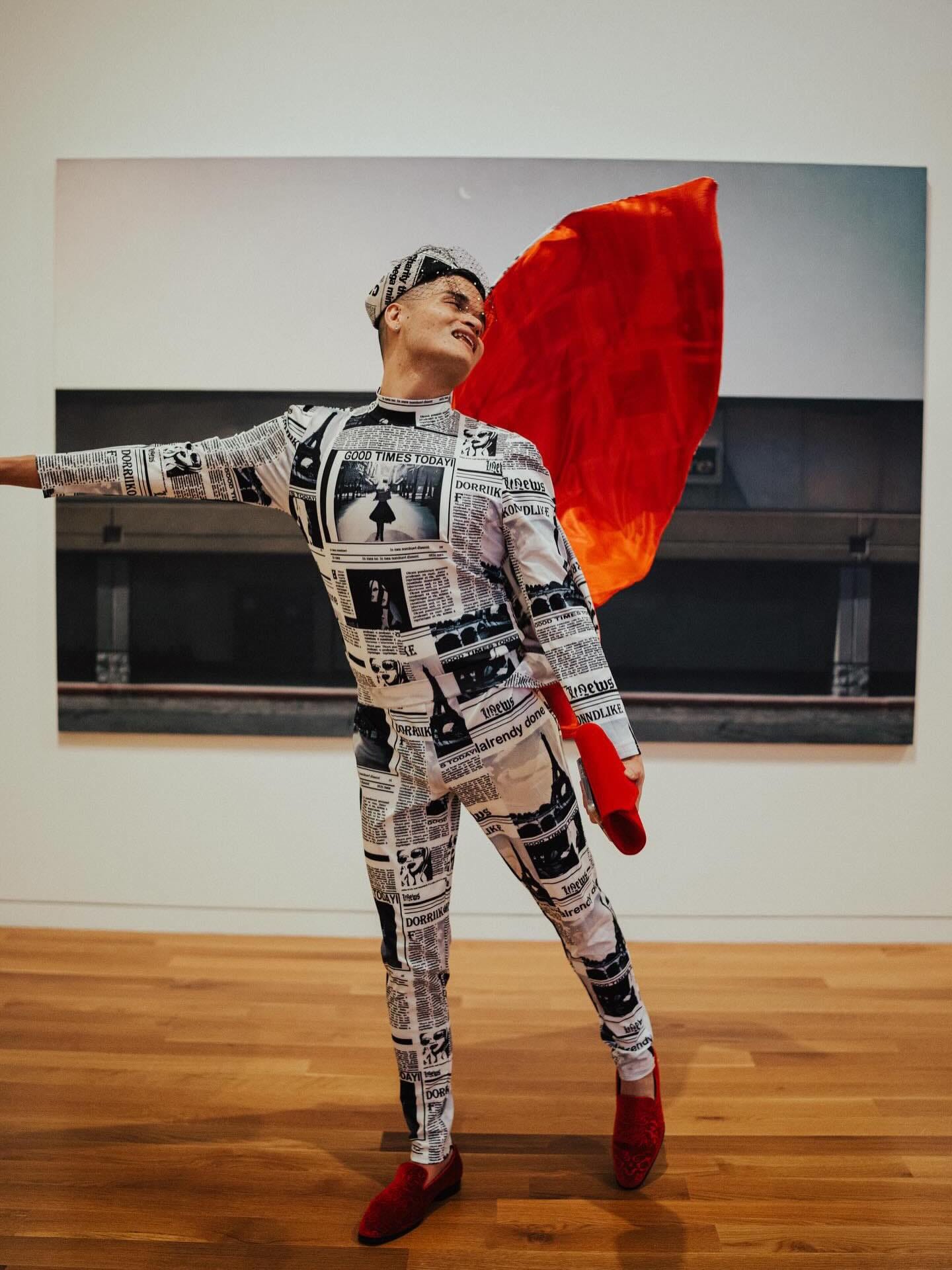
The feeling of a connection to both male and female experiences never goes away for me, but my presentation of how I show up as more male or more female fluctuates daily.
Yesterday, I felt incredibly non-binary with masculine dress shoes, a woven blue button down, navy shorts, sapphire hat, long wavy hair, Beatrice my bird purse, and a little bit of body glitter on my face.
Today, I feel like a jelly bean. Likely due to my sensory issues, I am just an ovoid sitting in a workout tank and workout shorts. I have been alone most of the day and the feeling of not being witnessed or observed feels glorious. I actually forwent filming content even though I had the time because I just couldn’t get ready for a camera and therefore other peoples perceptions of me.
If my husband and I go out on a date later, I will dress in something that I hope says “fabulous” more than it says masculine or feminine. I guess that is what non-binary at its best feels like to me: fabulous.
Gender is tough…especially if you fall into trying to measure yourself against some objective standard of gender like I did.
If you are struggling with your gender, considering that you may be a different gender, or coming into your own gender, I want you to know: You deserve to be you.
Sincerely,
Bowen
Selected Citations:
Nave, Gideon, Amos Nadler, David Zava, and Colin Camerer. 2017. “Single Dose Testosterone Administration Impairs Cognitive Reflection in Men”. Psychological Science 28 (10): 1398–1407. https://doi.org/10.1177/0956797617709592.
Christopher T. Smith, Yecenia Sierra, Scott H. Oppler, Charlotte A. Boettiger. Ovarian Cycle Effects on Immediate Reward Selection Bias in Humans: A Role for Estradiol Journal of Neuroscience 16 April 2014, 34 (16) 5468-5476; DOI: 10.1523/JNEUROSCI.0014-14.2014
You have my ongoing appreciation and respect for translating your profound reflections into accessible narratives. Your comments about being a professional whose work focuses on supporting LGBTQIA+ people resonated with me deeply, especially the insight that many people come to understand their own identities (in terms of both character traits and demographic identity traits) more fully through the process of supporting others.
I also love the way your story demonstrates the complexity of a child being socialized by and around adults with varying levels of open-mindedness and willingness to challenge gender norms. The contrast between the Easter Bunny story and the nail polish memory creates such a powerful emotional arc about affirmation, protection, fear, and the ways children internalize meaning.
The Sunday School teacher example especially stayed with me. I appreciate that at the most superficial level, it holds symbolic intrigue around the “true” color of the Easter Bunny, but beneath that artificial binary sits a much deeper story about you in relationship with your mother and the world! The image of your mom sitting beside you in that tiny chair helping you make the pink bunny anyway is such a powerful moment of advocacy and love. And honestly, the line about “this is not the Easter Bunny…this is just some blue rabbit” is one of those rare childhood moments that somehow manages to be funny, heartbreaking, philosophically sharp, and symbolically rich all at once
Props to you for the compassion and nuance with which you wrote about your father. It holds the painful reality of harsh experiences alongside an understanding of fear, socialization, and attempted protection.
Thank you for continuing to write with this level of vulnerability, clarity, and care, and thoughtfulness.
Love how you’re able to stay present with all that is happening and articulate your thoughts and feelings. Truly a gift 💝 thank you for wanting to share all that you do!